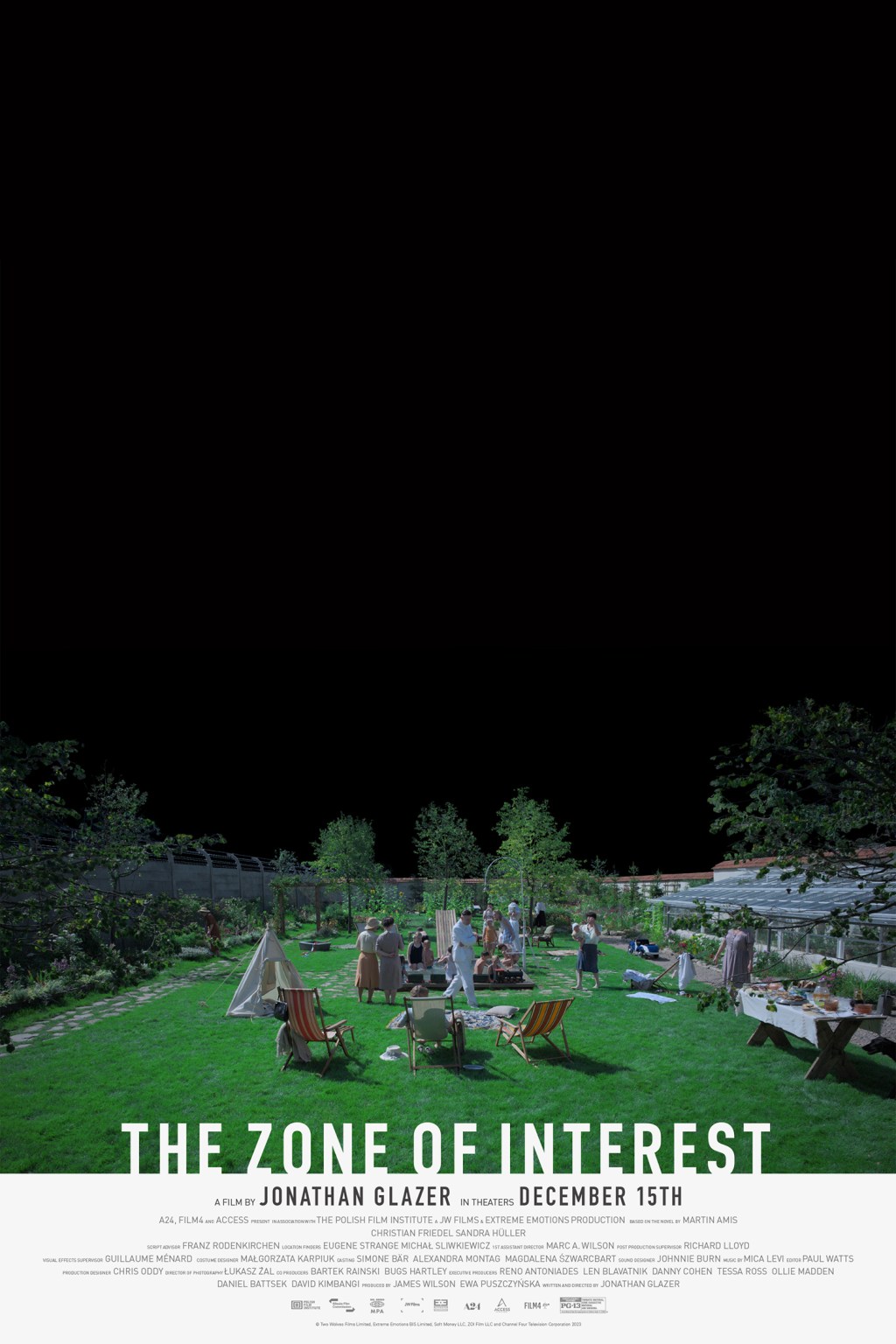
It’s interesting coming to a film months after it’s initial release, when all the critical focus has shifted and moved onto releases new, and observing not just how much your view on it has been informed by hearing the by lines of reviews, the speeches at awards ceremonies, and in this one’s case, the backlash to one of those speeches. It’s also interesting looking at the crowd also in the audience with you. Especically for this story, where so much of the focus is not on what you can see, but rather what you can hear that’s off screen.
Sitting down in Screen 4 of Picturehouse Central, I found myself being joined by enough punters to fill up half the theatre, something of itself rather surprising. I’d expected to find myself in the company of one or two other compatriots but not in the region of ten times that amount. There is probably something in the ongoing discourse around Glazer’s Oscars speech that has meant that people are still venturing to see this which, regardless of viewpoints of said speech, is definitely good for longevity of the project.
Because, once the credits had rolled on this, the thought that I’d been left with was one of time. Of pondering why, seventy-nine years after the end of the Second World War, a project covering this subject could be so confounding. There’s a moment towards the final act that Rudolph Höss seems to almost see into the future, glimpsing the museum that the camp would eventually become, and it’s this two minute stretch of film that, I think, summarises the whole film, almost whispering to you the Dr King quote about the “moral arc” of the universe. At the end of the day, the sheer banality of just ignoring what can be clearly heard around them could no longer continue, and time will eventually come around to making sure that we understand the lessons of these times.
This is not a film that will be watched over and over again. It’s not one that will sit as a rainy day film in secondary schools (like The Boy in The Striped Pyjamas). It’s almost not even a film at all. This is an art installation, planting itself in the zeitgeist’s conscience as an instruction to look around us when we should be paying more attention.
 PLOTTIVE
Leave a comment